
Project Overview
POTTER VALLEY PROJECT BACKGROUND
The Potter Valley Project is located on the Eel River and the East Branch Russian River, in Mendocino and Lake Counties. Owned and operated by Pacific Gas and Electric Co. (PG&E), it includes Scott Dam, Cape Horn Dam and a hydroelectric powerhouse (no longer generating).
The Potter Valley Project includes facilities to divert water from the Eel River to the East Branch Russian River, and eventually to Lake Mendocino and the mainstem Russian River. This provides water for farmers, businesses, and residents in Mendocino, Sonoma and Marin counties.
THE EEL-RUSSIAN PROJECT AUTHORITY
A joint powers authority created in 2023, the Eel-Russian Project Authority is governed by a five-member Board of Directors made up of representatives from the County of Sonoma, Sonoma County Water Agency (Sonoma Water), the Mendocino County Inland Water and Power Commission, and the Round Valley Indian Tribes.
PURPOSE OF THE EEL-RUSSIAN PROJECT AUTHORITY
PG&E will decommission the Potter Valley Project on the Eel River and remove Scott and Cape Horn dams. This will bring to an end more than 100 years of diverting water from the Eel River to the Russian River watershed. Originally used to generate electricity for the Ukiah Valley, the diverted water also provided for municipal, irrigation and ecosystem benefits to the Russian River watershed.
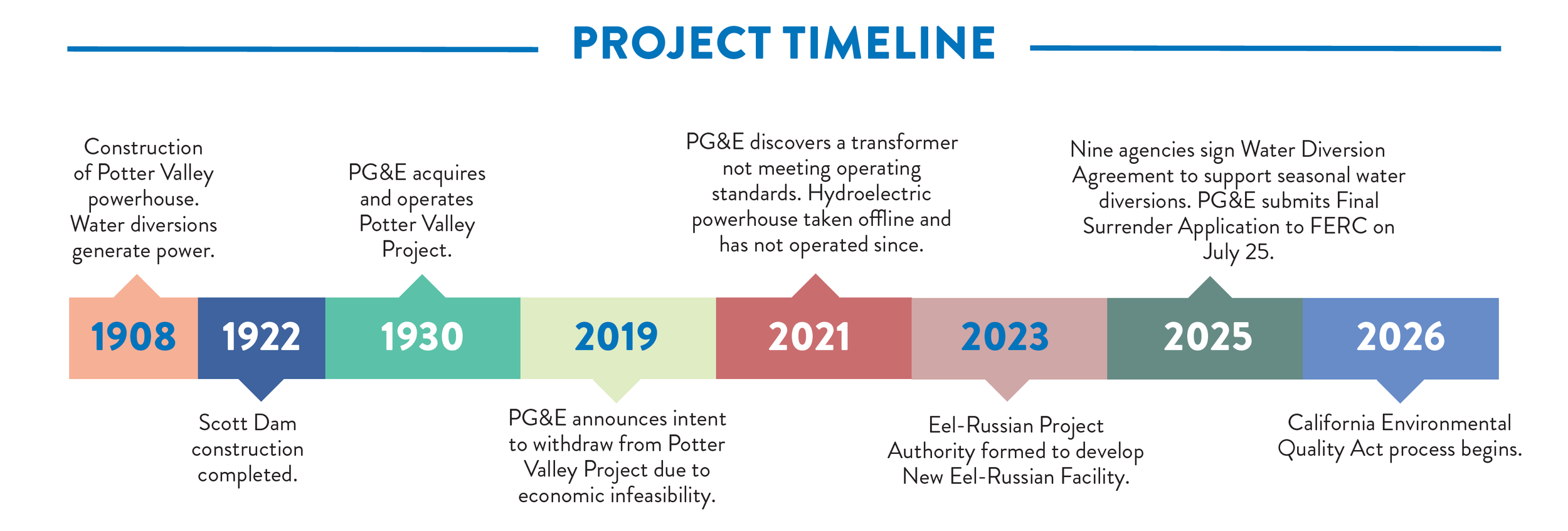
In 2019, when PG&E announced it was withdrawing its preliminary license application and would no longer seek relicensing, it invited interested parties to consider taking over the hydroelectric license. No group came forward and as a result, PG&E began the formal license surrender process. Local agencies, recognizing the urgent need to protect the regional water supply, formed the Eel-Russian Project Authority to lead the transition and develop a viable solution for maintaining the crucial water diversion.
Given the diversion of Eel River water will end with PG&E’s license surrender and decommissioning of the project, the primary focus of the Eel-Russian Project Authority’s work is to to develop a reconfigured water diversion facility upon PG&E’s removal of Cape Horn Dam (via Federal Energy Regulatory Commission order). This will help continue to support water supply resiliency in the Russian River watershed by diverting water from the Eel River during fall, winter, and spring for storage and use in the Russian River during the dry season. Diversions would be undertaken so as not to affect the Eel River’s ecosystem.
Maintaining seasonal diversions of Eel River water to the Russian River and Lake Mendocino would preserve the water supply for hundreds-of-thousands of people in Mendocino, Sonoma, and Marin counties, and support wildlife, riparian habitat and sensitive ecosystems along the Russian River.
WHAT ARE THE IMPACTS WITHOUT WATER DIVERSION?
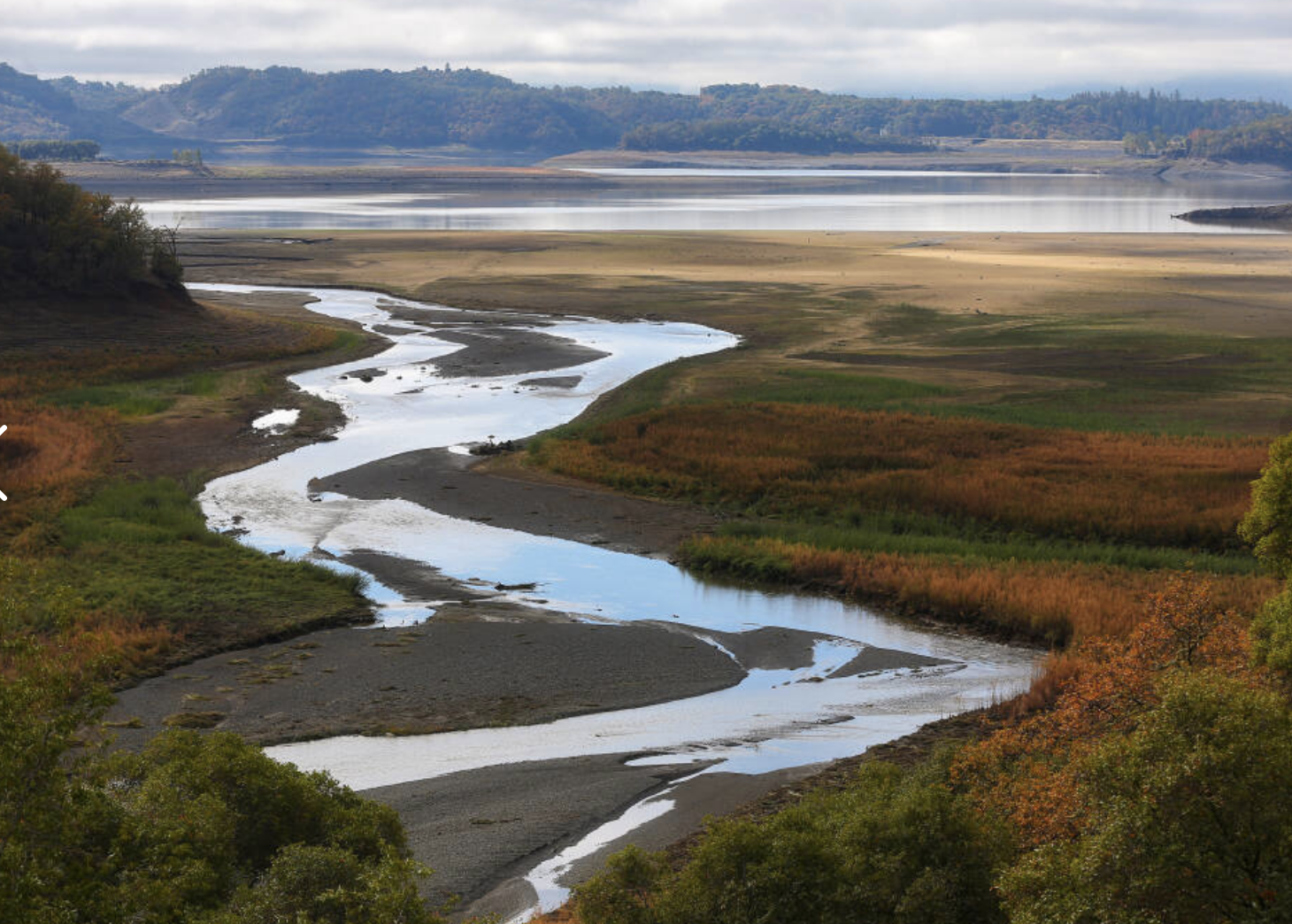
Without the seasonal Eel River diversions, Lake Mendocino would frequently have shortages, reducing water availability to downstream users. Further, there would be a serious risk of Lake Mendocino draining in drought years without substantial intervention such as curtailment of downstream water rights — as has already occurred in 2021 and 2022.
If a replacement project is not implemented, termination of this water diversion will pose a serious threat to the businesses, cities, water suppliers, residents, tribes, farms, wildlife, riverine habitats, and fisheries, all of which depend on the Russian River — a key water supply for over 600,000 people in Mendocino, Sonoma and Marin counties. With the cessation of the water diversion, losses in the tens of millions of dollars per year would be expected in the affected local economies.
In February 2025, several entities expressed their support for the concept of a project to provide for a seasonal diversion of water, by signing a Memorandum of Understanding. These included California Department of Fish & Wildlife, Round Valley Indian Tribes, Sonoma Water, Mendocino County Inland Water and Power Commission, Cal-Trout, Humboldt County and Trout Unlimited.
THE EEL-RUSSIAN PROJECT AUTHORITY’S WATER DIVERSION REPLACEMENT PROJECT
In 2024, the Eel-Russian Project Authority submitted a proposal to PG&E to allow for the construction of a new diversion facility, called the New Eel-Russian Facility. After Cape Horn Dam and a fish barrier are removed, and Van Arsdale Reservoir is drained, the Eel River will be free-flowing. The preliminary concept of the New Eel-Russian Facility is that a mechanical pump station would be constructed, utilizing the existing water diversion tunnel (buried behind a new retaining wall), with a reconfigured diversion tunnel entrance. Water would only be transferred during seasonal wet periods. To take full advantage of the seasonal diversions, studies are underway investigating expanding storage in Lake Mendocino and finding other locations for storing water from the Eel River. A new fish screen would be installed so that fish would remain in the Eel River.
PROJECT COST AND FUNDING
The total construction cost of the new diversion facility is preliminarily estimated at $50 million (as of March 2025). Russian River water users will pay for the cost of annual operations and maintenance, and support restoration efforts on the Eel River.
In late 2023, the U.S. Bureau of Reclamation awarded a $2 million grant to Sonoma Water to advance the engineering design of the diversion facility. Additional federal and state funds are being pursued to reduce design, permitting, and construction cost for Russian River water users.
STATUS OF THE EEL-RUSSIAN PROJECT AUTHORITY’S EFFORTS
PG&E filed its Final Surrender Application with the Federal Energy Regulatory Commission on July 25, 2025. The application included the concept of the New Eel-Russian Facility project.
While the Federal Energy Regulatory Commission considers PG&E’s surrender and decommissioning application, the EelRussian Project Authority will complete engineering designs for the new facility and work with other state and federal regulatory agencies to secure the permissions necessary to construct the facility.
The design and permitting phase of the new facility project is expected to last several years.
WHAT IS THE FEDERAL ENERGY REGULATORY COMMISSION?
The Federal Energy Regulatory Commission (sometimes referred to as FERC) is an independent agency regulating natural gas and hydropower projects, as well as the interstate transmission of natural gas, oil and electricity.
Federal Energy Regulatory Commission authorization is required for PG&E to surrender its license and decommission the Potter Valley Project, remove the dams, and provide the opportunity for the New Eel-Russian Facility project to be implemented. Various environmental reviews and studies, such as required by the National Environmental Policy Act, will need to be conducted prior to a final Federal Energy Regulatory Commission decision.